Author-Chris Wortley MBA

Entitlement
We live in a country where people have become accustomed to being entitled, to having provisions made for us because we pay our many different types of taxation and so, to a degree this expectation is not unreasonable.
- Demographic change has placed a burden upon the provision of services. Increased taxation is one way of continuing the quality of services, however any politician wishing to choose this as a strategy will fail and so as citizens, we often get what we deserve.
- The increasing cost of providing services however is within the providers control even if those services may have become more complex and sophisticated. An example of this is within the health service itself. An ageing population, growth of obesity and the impact on health. Couple this with new discoveries, cures, technology and the cost of delivery.
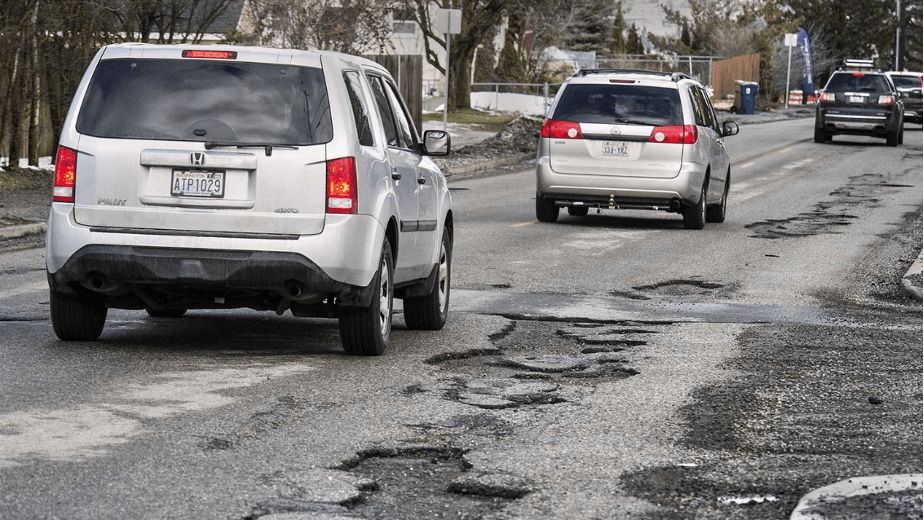
- Control of costs. There are so many examples of how governments have injected Billions into our services infrastructure, only to be eaten up by poor management control of budgets, where only a small percentage of the cash injection gets to front line services. Equally, governments have placed a responsibility onto local authorities to maintain the road infrastructure, Potholes being a good example. Government provides a small percentage of the cost of maintenance and local authorities are then thrown into a “Postcode Lottery” of which to fix to minimize citizen complaints. This often results in temporary fixes that exacerbate the problem.
- Motorists spend between £12, 000 to £28,000 as an average today on a car purchase. They then spend £1,800 per annum maintaining and keeping the vehicle roadworthy.
- In 2018, the hourly cost of parking inside of London and major conurbations was £3 for off-street parking and £4.80 on street. Outside of these conurbations it was £1.10 for off-street parking and £1.65 for on-street parking. The differential between on and off street should drive traffic off-street and improve kerbside congestion, however a 50-60% differential when dealing with such small ticket items is unlikely to be a sufficient driver to encourage this consumer behaviour.
- Other commodities are currently facing 9% annual increases (Cup of coffee). Local authorities try to be fair to motorists by only increasing parking fees every 5 years on average. Unfortunately, when this happens the % increase is seen as “price gouging” when in fact the annual increase is likely to be c1-2% per annum. But do car park owners use a blunt tool, price increasing, rather than considering other ways of improving revenue and allow them to maintain car parking to a higher standard.
The Grudge Purchase

The following image of road surfaces today is not an exaggeration of road infrastructures, this creates grudge in the same way as a poor car park surface with limited facilities does
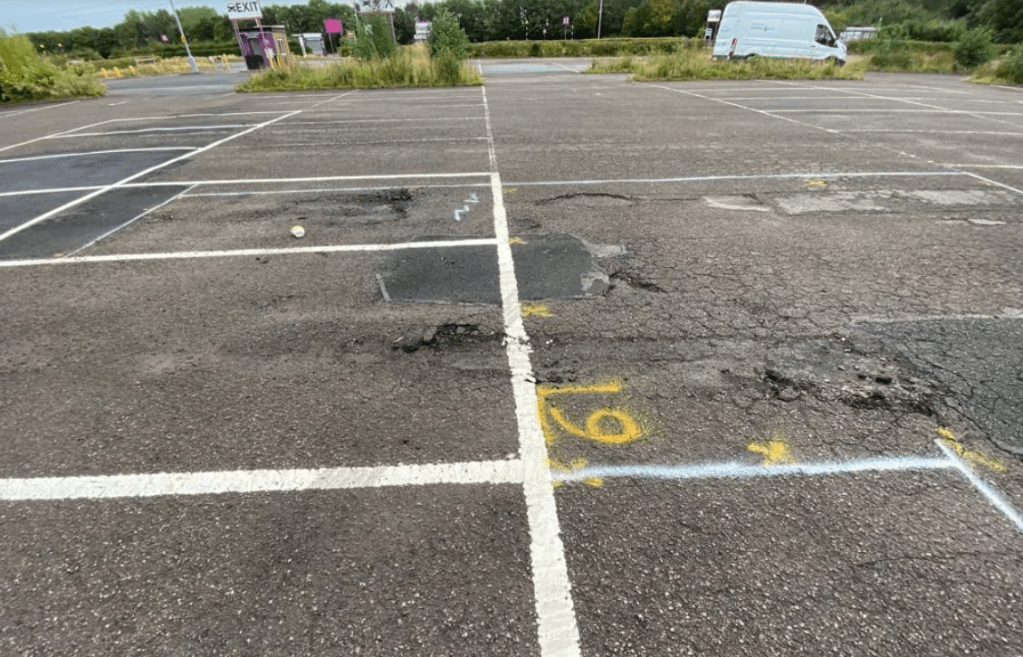
Parking your vehicle in a well-lit, spacious, clean and regularly maintained environment with good facilities is likely to remove a large element of grudge.
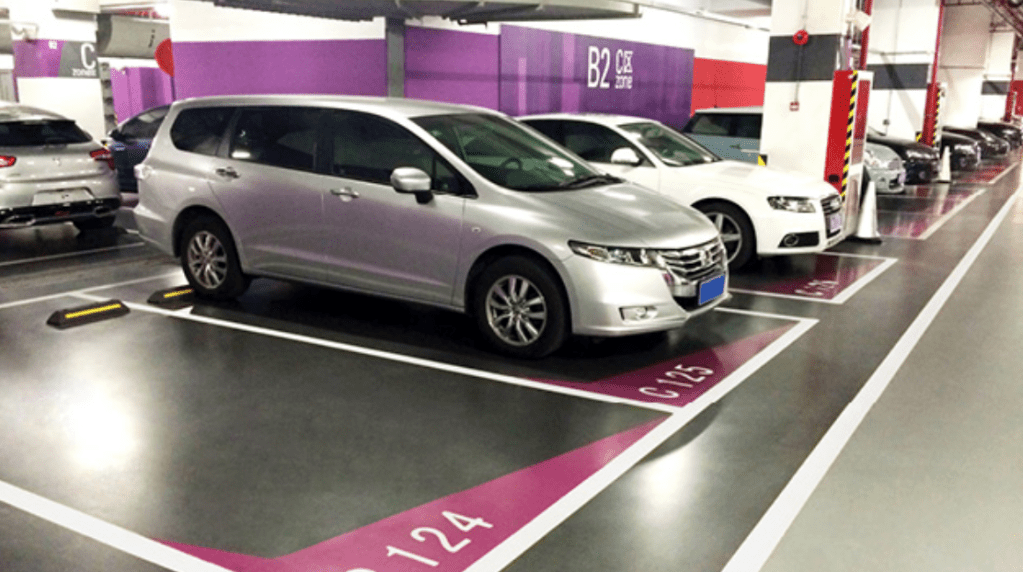
Unfortunately, today, our industry is having debates about “Vehicle Obesity” and banning larger cars from car parks rather than creating an area with larger bays that would command a higher price. Perhaps getting to the nub of why we drive larger vehicles today is a better starting point. Is it that we have become a larger race? Medical practitioners would agree.
Do we feel safer in a larger vehicle, or do we need a 4 x4 to navigate todays roads that in many cases are almost becoming the equivalent of off-road terrain?
We appear to be at odds with societies needs v service provision and in most industries the consumer is becoming more educated, affluent and has higher aspirations. In the world of mobility, we appear to be reducing the service and charging more.
Starter For Ten
I mention here the British Parking Association (BPA). They introduced many years ago “Park Mark”. An award given to those car parks where they have been inspected by both Police for safety and security and an expert in the field of car park quality. Here we have a good start in regulating the quality of a product. It doesn’t have star ratings, and doesn’t always price based accordingly but then this is a good start by the BPA.
In Portugal many years ago, restaurants were given a star rating based on quality of food and service, this then allowed the restaurant to charge more based upon their star rating and advised consumers perhaps where not to eat if the rating was low. The restaurant with a 1-star rating was limited in what it could charge and so incentivized to improve the quality of its food and service if it wanted to attract more customers and charge more for its product. The menu was regulated in what it could charge.
The BPA have recently decided along with the International Parking Community (IPC) on a single code of practice. We currently have two different sets of legislation based upon private and public parking and there is an effort to amalgamate this into one to avoid confusion, the motorists see a parking spot and aren’t always aware or even care about different legislation governing them.
The single code will embrace parking but perhaps it could concern itself with far more in the areas of mobility.
In Summary
As a society, we should be able to park safely and be charged a fair price based upon the quality of the parking provision and if we do not pay that price there should be fair enforcement.
In my next article I will cover the subject of fair enforcement
About the author
Chris has extensive commercial, technical and practical experience in the parking & mobility industry.
Over the last 20 years has gained an unsurpassed knowledge of the private, public and airport parking transportation and mobility sectors.
In his most recent role, Chris was the Managing Director of Metric Group UK, the manufacturer of car park payment solutions, with over 900 customers and 18,000 parking solutions UK and worldwide.
He has delivered several consulting projects with extensive work at airports in the APAC region, UK, Europe and USA.
Working with investment funds and potential acquirers he has advised at due diligence and post-acquisition level for investors and C level executives on strategy and implementation.
Prior to consulting, He worked for some of the world’s largest car park operating companies at General Manager level.
As Head of Parking Services at Royal Borough of Greenwich in London, Chris was responsible for delivering on and off-street parking services in a very diverse London borough.
As Country Manager for an Electric Vehicle (EV) start up business in 2011, he engaged with real estate and parking companies to build an EV infrastructure and was one of the EV pioneers.
As a practitioner he gained a deep understanding of airports whilst Head of Commercial, for parking and ground transportation at both London Gatwick airport (world’s largest airport parking operation) and Melbourne International airport, Australia, the largest parking operation in the Southern hemisphere
Chris holds an International Master of Business Administration qualification that he undertook during full time study at Henley Business School in 2003.
| Monday 3rd June | Chris Wortley | United Kingdom |
 Parking and Green Mobility
Leave a comment