Planning Permission Has to Be Controlled and Thought Through

Today I’m diverting from Parking and Mobility that has been my home for 20 years to Retail that was also my home for a longer period and very close to my heart. I will return to parking at the end of this article.
Recently I visited two very middle England towns that 10 years ago were both affluent, had a great range of retail and facilities and people wanted to live there.
Banbury and Cirencester.
Today, Only one of them remains in a good place.
Cirencester has a great range of shopping that is a well balanced mix of independent retail that are definitely targeting the audience well and almost all of the units are trading, there is a vibrant, high quality Artisan market and its a joy to visit
On the other hand, Banbury has more units closed than open, most of the chains have moved out of town and space is being occupied by Charity shops, nail bars, vape shops and mens barber shops.
If you listen to Main Stream Media (MSM) which I don’t, you will be advised that online retailing and home deliveries are replacing bricks and Mortar retail.
The Real Disruption
It’s far more than that-Its about Edge of and Out of town retailing and you wont be surprised to hear that whilst there is very little edge of town retailing in Cirencester, it abundant in Banbury.
Retailers want their customers to navigate to their stores as easily as possible, they are tired of the Landlord charging excess premiums for occupying prime / best pitch locations and to help retailers increase the customer basket size, they like on site parking, that is free to match a reasonable dwell time in store.
So what we are left with is a failing town centre that becomes so run down that crime takes over and the independent retailer that can’t afford to be in a large edge of town (EOT) unit is left in an area with low footfall, their business won’t grow as it should and is more likely to fail.
Declining Choice
As consumers we will shortly be left with a very vanilla chain store presence with no opportunity for new brands. Imagine if this had been the case 25 years ago. Many of the successful chains had to start as an independent, could they do the same today.
Planning permission
How do you solve this?
Perhaps if planning permission was not handed out so easily for edge of town developments. Should there be a requirement that where there is an empty unit(s) in town centres, that planning permission for EOT is denied?
Should landlord be penalised for allowing empty units to prevail. Perhaps they should be made to pay UBR x 4 for every empty unit.
Can Edge of town be brought closer to the Town Centre so that you can walk to the heart of the centre after parking up and shopping in one off the larger units. Joining them up. Mass pedestrianisation.
Can parking be made more available with easier access. it doesn’t even have to be free but it does need to be accessible, navigable and of good quality.
Public transport depots should be part of the town centre and a short walk to the core. Lets not build them too far away like railway stations.
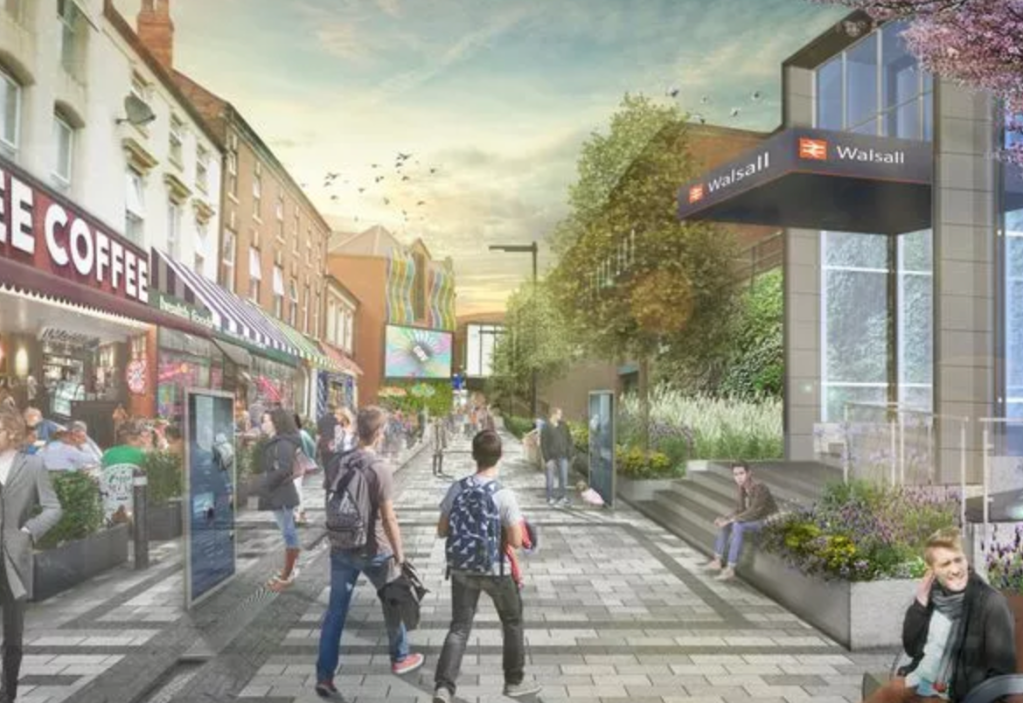
The Failing Market Town
In the same towns where the shops are closing and moving, the daily / weekly market is dwindling and often reduced to Bric a Brac, DVD’d a few books and some quorios.
Can town centre squares be repurposed as parks, putting green in the centre of a town with units around the park encouraged to provide food and beverage.
The Myth
“People shop edge of town and leave behind the town centre because of parking costs”
With most parking tariffs outside of London being lower than the price of a coffee per hour, price is not the consideration. Look at the value of cars that park in car parks.
People shop edge of town because its more convenient, easier to park, the quality of parking is superior and the range of shops are growing.
Joining things up
How long will it be before Town Centre planners understand that for every action there is a reaction, moving and improving is only part of the solution but consider what is left behind.
About the author
Chris has extensive commercial, technical and practical experience in the parking & mobility industry.
Over the last 20 years has gained an unsurpassed knowledge of the private, public and airport parking transportation and mobility sectors.
In his most recent role, Chris was the Managing Director of Metric Group UK, the manufacturer of car park payment solutions, with over 900 customers and 18,000 parking solutions UK and worldwide.
He has delivered several consulting projects with extensive work at airports in the APAC region, UK, Europe and USA.
Working with investment funds and potential acquirers he has advised at due diligence and post-acquisition level for investors and C level executives on strategy and implementation.
Prior to consulting, He worked for some of the world’s largest car park operating companies at General Manager level.
As Head of Parking Services at Royal Borough of Greenwich in London, Chris was responsible for delivering on and off-street parking services in a very diverse London borough.
As Country Manager for an Electric Vehicle (EV) start up business in 2011, he engaged with real estate and parking companies to build an EV infrastructure and was one of the EV pioneers.
As a practitioner he gained a deep understanding of airports whilst Head of Commercial, for parking and ground transportation at both London Gatwick airport (world’s largest airport parking operation) and Melbourne International airport, Australia, the largest parking operation in the Southern hemisphere.
Prior to parking and mobility Chris worked in Retail at W H Smith, Waterstones and Allied Carpets.
Chris holds an International Master of Business Administration qualification that he undertook during full time study at Henley Business School in 2003.
 Parking and Green Mobility
Leave a comment