
Paying a fair price when you make a mistake, paying a larger price when you evade deliberately.
Updated 13/06/2024.
In my last post, I made the point that parking is very much a grudge purchase and despite us paying a higher price and complaining less when purchasing other consumables, there is a greater reluctance to pay for parking when storing your prize possession.
I can understand why people resent paying for a poor service or experience and that’s why the parking industry really needs to up its game and provide good quality parking provision at a fair price.
But what about when we don’t pay? There will be many reasons and some should be seen as acceptable, others, deliberate avoidance.
Enforcement that is deemed unfair will perpetuate the “Grudge” purchase.
Public parking
Local authorities are using legislation under the Traffic Management Act 2004. This is a very outdated piece and wasn’t introduced until 2008, so 4 years out of date when introduced 16 years ago.
Technology has come on a long way since then and to a degree, technology has been halted due to the difficulty in introducing improvements that won’t comply.
So technology has almost advanced to the level that legislation will permit it to operate and add value to-legislation needs to change.
But is legislation alone the only limiter?
Pavement parking
This is no longer restricted by legislation and in London has been capable of introduction for 50 Years.
This has to be the most selfish type of parking. It forces pedestrians into the road and danger, is bad enough for most of us but if you have restricted mobility or with a child, very dangerous.
Local authorities began enforcing the law in December 2023, and drivers can now be fined £100 if caught out. Parking on pavements has been outlawed in London since 1974, and councils there have the power to fine drivers up to £130 if caught doing so.
So, if this law has been enforceable in London since 1974, why do most London authorities not enforce?
Perhaps there is an excuse for municipal authorities where legislation only came in recently.
To cease pavement parking requires many changes:
Resident permit restrictions, changing of traffic orders to avoid congesting some areas and of course taking care to ensure that roads don’t become blocked and emergency vehicles cannot gain access to a crisis.
That being said, I don’t see pavement parking being enforced any time soon in most areas. it would certainly improve the quality of our streetscape and encourage perhaps a big rethink in how we could provision cycle and scooter lanes.
Edinburgh City Council recently announced introducing this and as a city are somewhat leading the way here.
When it comes to parking enforcement, a local authority will exercise discretion when it can and for some contraventions will allow 1 strike policy where they believe that a genuine mistake was made.
The appeals adjudicator publishes a league table each year of those local authorities that have the most cases that go to appeal v the lowest number.
Local authorities don’t want to be at the top, this might suggest that their enforcement is on the aggressive side. Equally, they don’t want to be bottom of the league, as this might suggest that they are poor at controlling the parking in their borough.
All local authorities would rather encourage people not to contravene and so they focus on how they can improve compliance, this can range from introducing better traffic schemes to encouraging motorists to chose their parking more carefully.
Funds raised from parking contravention has to be dealt with in a strict fashion, it cannot be used to prop just any local authority service, but in the main it is plowed back into service improvements for mobility.
An example of this was a southern local authority was able to provide a night bus service due to being supplemented by funds raised by parking enforcement.
This resulted in improvement in the local towns night time economy and meant that those accessing a night out could leave their car at home.
Private parking
Legislation for parking on private land is different which in itself is ridiculous. Ask any motorist and they will be hard pushed to know the difference between public and private land.
This is where, as an industry we get things so wrong and it can’t continue.
Under the Protection of Freedoms Act 2012, it is no longer legal to clamp vehicles on private land unless they are subject to a court order or a local Authority order for recovery.
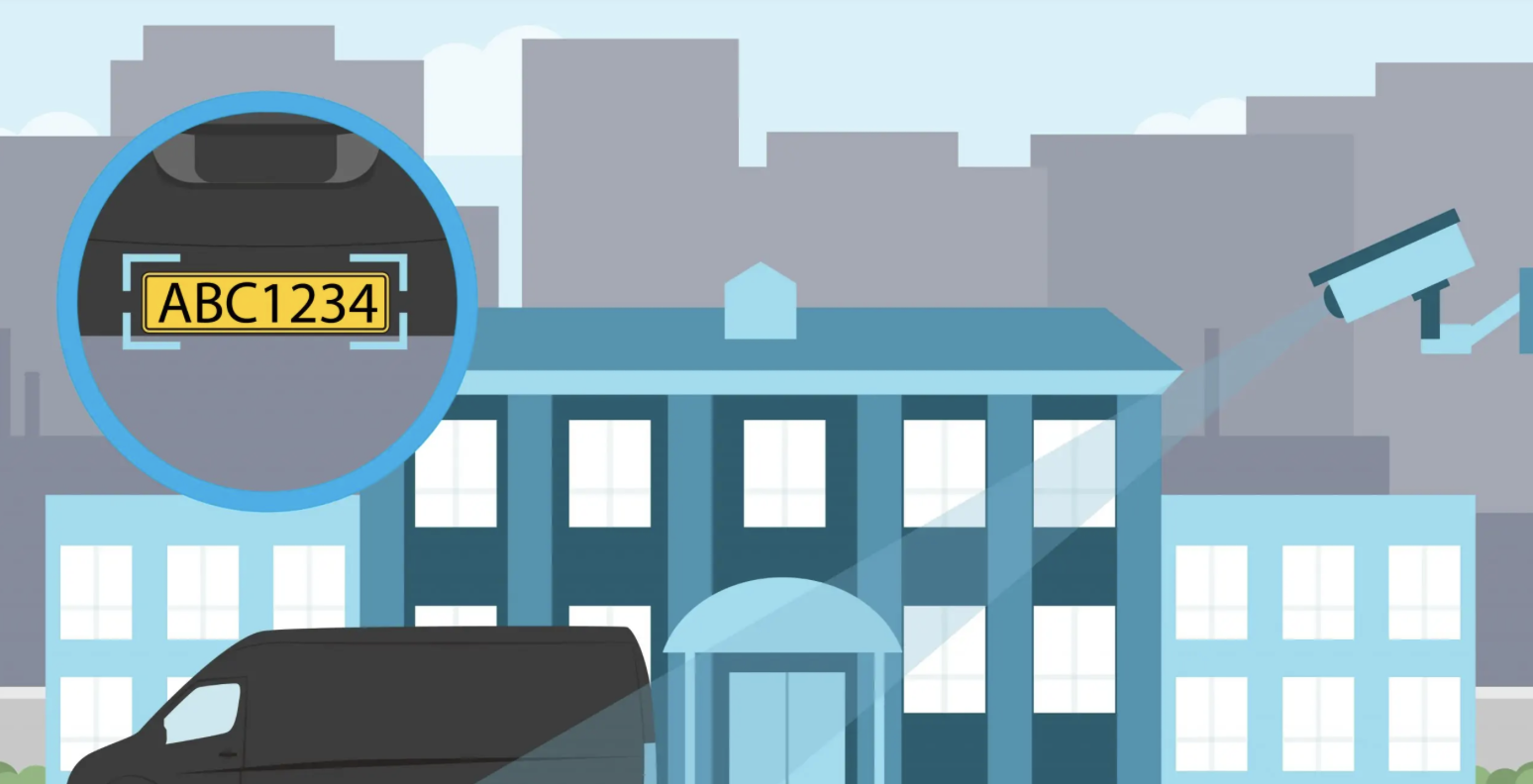
This act opened up a new way of enforcement, ANPR (Automatic Number Plate Recording) cameras.
Many private companies turned up and offered land owners a way of discouraging nuisance parking. A very sensible thing to do.
A supermarket or retail park wants to ensure that parking spaces are provided to encourage high footfall to the stores and not provide free parking to anyone who wants to store their vehicle there all day or longer, or even park to access other facilities: Football matches, events or even other town centre facilities.
A single code of practice being influenced by British Parking Association (BPA) and International Parking Community (IPC) Both UK organisations are recommending many changes and currently there is a 10 minute grace period observed by parking management companies for those who go over the allotted time before they are issued with a charge. But does this go far enough?
It still does not deal with the proportionate offence, It doesn’t deal with the quality of the car park or in fact the value of the charge which could be seen as excessive for someone who parks for 1 hour 41 minutes v the person who parks for 3/4 hours or the whole day and night.
Today there are hundreds of private parking companies offering this service and its lucrative business.
The largest provider made an operating profit of almost £11m in 2022. almost doubling over the previous year.
Their revenue was £49m, almost £10m up on 2021.
A substantial amount of this comes from ANPR enforcement. Clearly the £100 fine, whilst not always a deterrent is bringing in the cash. But will increasing the £100 to say £120 or £150 improve compliance or just make the parking companies richer?
Having worked in the commercial sector most of my life, I am certainly not anti-profit. But here is the issue.
Increasing of enforcement charges
The industry is campaigning to increase penalty charges or parking fines as a maximum of £100 is not deterring an element of society.
Of course there are stories of Footballers parking their sports cars valued at +£300k and not worrying about the cost of an enforcement notice, this is the exception.
There are some that will say that there is a growing number of middle class motorists who find it cheaper to accept a fine than to pay for parking.
Raising of Road Tax on luxury vehicles will never deter purchase, simply put because if you can afford a Ferrari, you can afford the much higher road tax and if you have the same car, you can definitely afford even a doubling of a parking fine.
Enter the world of Economics and key drivers.
If you charge 10% too little you will have people queuing around the block for your service. charge 10% too much and you suppress your product.
Pre-covid, most car parks rarely achieved 100% occupancy. 80% was a good number.
Post covid, 60% occupancy is a more realistic number. Of course there will be exceptions and both ways. There always are.
Demand is not as high as it used to be and supply is as great as it always was.
So, with this backdrop, is the reason given to increase the cost of non-compliance a valid one particularly when you consider that some of the land enforced is certainly not fit to park your car on.?
Does one size fit all
The supermarket customer who has been persuaded to shop and retain their loyalty to a brand based upon much over-used advertising campaigns on price comparison / quality statements, who then overstays their welcome, perhaps a cake and coffee with their friend or a full shopping basket, then falls foul of going over the maximum stay period of 90 minutes-£100 penalty.
In 2023, the average shopping basket price was between £75-£91.
Imagine then receiving a letter a few days later from an enforcement company wanting to more than double the cost of your shopping. It’s outrageous.
More importantly, what impact does that have on the retailers brand, would you return to shop there again?
I am not advocating that there can be no enforcement for contravention. What I am saying is that there must be a scale of charges based upon the amount of time overstayed in the car park.
I would also like to see data from the enforcement companies. I would not be surprised if those who pay their fine straight away are those who have made a mistake v those that don’t pay or pay very late and are deliberately evading.
What we do know today is that many, not all of the private enforcement companies play a volume game rather than take the value approach. They go after almost all contravening and in many ways recovery rates can be as low as 11%.
Recovery rates in the public sector are North pf 50%.
In Summary
So far, I have spoken about how as an industry we must provide good quality car parking and only charge accordingly, only then when it is of a high enough standard.
When things do go wrong, enforcement has to be there as a deterrent and it has to be fair.
By increasing the maximum penalty is hardly likely to deter those who don’t pay at the lower level, but will result in penalising those that are honest enough to admit they were wrong-Is that what we want to achieve?
I could park in most car parks in the UK for less than £100 a day and so lets not make a drama over enforcement and ensure that it’s proportionate.
Let’s also see tougher regulations from the BPA to approve operators and the quality of car parks, local authorities should have to approve land for the use of parking and to be of a higher standard and they should start by setting an example themselves.
Private parking companies should have to provide data that demonstrates fairness to continue to be an approved operator and show that they have a tiered penalty tariff for how they deal with those that make a mistake v those that deliberately misuse the land to their benefit.
We should expect less from the BPA and IPC in supporting the raising of charges, surely their role is to help the industry lose its “Grudge” label.
Perhaps data that has been promised from the National Parking Platform (NPP) will inform us all better before making crucial pricing and enforcement decisions. NPP is a subject I will return to and cover in a post of its own.
About the author
Chris has extensive commercial, technical and practical experience in the parking & mobility industry.
Over the last 20 years has gained an unsurpassed knowledge of the private, public and airport parking transportation and mobility sectors.
In his most recent role, Chris was the Managing Director of Metric Group UK, the manufacturer of car park payment solutions, with over 900 customers and 18,000 parking solutions UK and worldwide.
He has delivered several consulting projects with extensive work at airports in the APAC region, UK, Europe and USA.
Working with investment funds and potential acquirers he has advised at due diligence and post-acquisition level for investors and C level executives on strategy and implementation.
Prior to consulting, He worked for some of the world’s largest car park operating companies at General Manager level.
As Head of Parking Services at Royal Borough of Greenwich in London, Chris was responsible for delivering on and off-street parking services in a very diverse London borough.
As Country Manager for an Electric Vehicle (EV) start up business in 2011, he engaged with real estate and parking companies to build an EV infrastructure and was one of the EV pioneers.
As a practitioner he gained a deep understanding of airports whilst Head of Commercial, for parking and ground transportation at both London Gatwick airport (world’s largest airport parking operation) and Melbourne International airport, Australia, the largest parking operation in the Southern hemisphere
Chris holds an International Master of Business Administration qualification that he undertook during full time study at Henley Business School in 2003.

 Parking and Green Mobility
Leave a reply to suhaylahheinzle1983 Cancel reply